
Post pandemic wine investment update
8.02.22 – Fine Wine Investment –
The Fine Wine market has enjoyed rather a decent pandemic and is in such robust health that articles have recently been penned wondering whether a correction might be due. “Corrections” are NOT “bear markets”, by the way. Corrections occur within the life of bull markets for any or for no reason at all, and can be characterised as a temporary pullback in prices, in index terms of between 10 and 20%. If bull markets are difficult to time your way through, corrections are downright impossible, and in mainstream markets like equities most sensible advisers will counsel against trying to dip in and out: unless you are worried about the onset of a bear market, stay invested.
The thing is, whilst the Fine Wine market does not enjoy sufficient volume of trading to be mainstream, it does enjoy sufficient breadth and complexity to allow you to operate when certain commentators worry about corrections. What this means is that you needn’t be put off just because a lot of wines have had a good run, because there will still be plenty that haven’t. Here at Amphora we see our task as trying to help pick the likely outperformers in future phases.
From a sectoral perspective the clear leaders over the last year have been from Burgundy and Champagne. In that time the Liv-ex 1000 has risen 22% whilst the Burgundy and Champagne sub-indices have risen 37% and 48% respectively. It is also true that virtually whatever you held within those sectors would have seen you well. There are obviously price performance differentials, DRC Grands Echezeaux 2008 rose only 12% whilst the 2012 rose 92%, for example, but by and large it was hard to put a foot wrong.
Seemingly astronomic cost has been no hindrance to the performance of many of the wines from Burgundy, and it is encouraging for the broader market that people are happy to pledge such large sums for either consumption, collection, or investment purposes. Equally, it is quite hard to argue that there is nothing to celebrate when Champagne prices are going through the roof. If you add to this the fact that trading breadth and volumes going through the Liv-ex platform are at all-time highs then it becomes easier to see why a lot of people are attracted to the Fine Wine market.
The question, as always, is how to play it, and the answer has to start with a further question: what are you trying to achieve? We referred above to consumers, collectors, and investors, and it is important to know which of these you are. The market itself doesn’t care, of course: it welcomes all-comers. At Amphora we feel we can be of most benefit to collectors and investors, even if we do spend a lot of time sourcing Fine Wines for consumption purposes. After all, if wines weren’t consumed, one of the key plinths of the investment dynamic, the removal from the market of supply, would be compromised.
It is important to make a distinction between collecting and investing. Typically the collector is buying wines for reasons other than simply to make a profit, whilst for the investor that might be the sole objective. Obviously, a Venn diagram would have at its centre those happy people who might collect, invest, and consume Fine Wines, but for many it is enough to do one or two of the three.
We would suggest that the buyers driving prices of Burgundy wines higher are likely not simply investors, because there tends not to be sufficient underlying liquidity to make an investor comfortable of being able to exit, and this in turn leads us towards the answer to another key question: should investors attempt to ride the wave in Burgundy and Champagne, or might they be joining too near the end of their particular party?
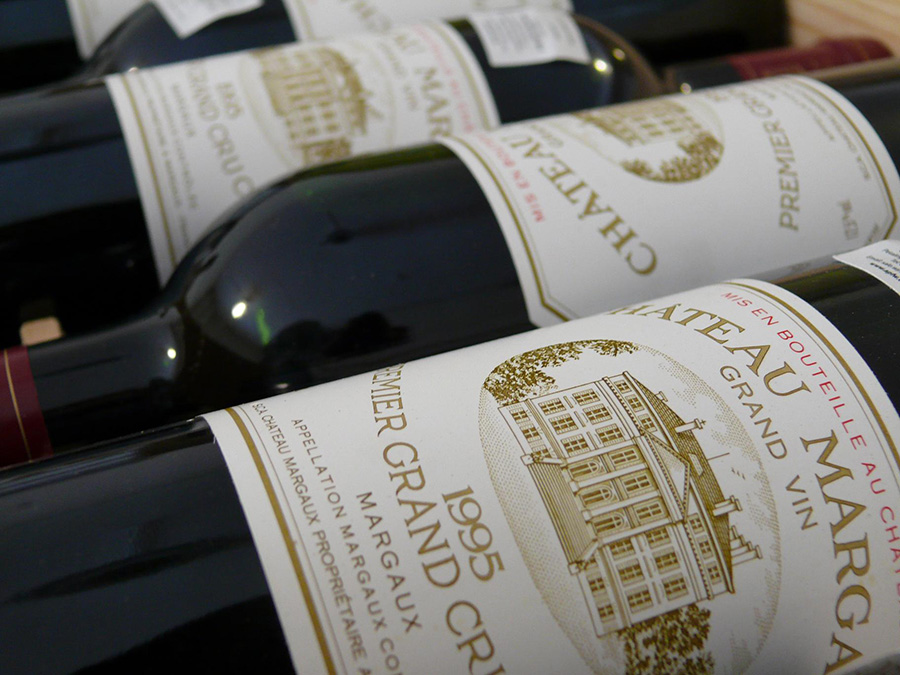
For an investor intent on meaningful portfolio diversification, this is precisely where Bordeaux comes into its own. Firstly, there is abundant supply, and as a result it is easier to make price comparisons on a relative basis. It’s all very well being told that DRC 2010 rose 38% last year but when you drill down and find that the last trade for a bottle (at just under £16,000) was in June 2019 it hardly instils confidence in your being able to sit one in your portfolio. Such frustrations tend not to apply in Bordeaux.
The beauty of this higher production from an investment perspective is that you can more easily identify when prices are “wrong”. We use quotation marks because of course in a market place prices are never wrong, in so far as you can only receive what someone else is prepared to pay. What we mean by wrong in this context, is wrong on a relative basis.
All great medium and long term investors succeed because they are able to identify good value, and distinguish it from bad. You buy when something is underpriced, and sell when it is overpriced. It is very difficult to establish value when there are so few comparables, as we would argue in the Burgundy and Champagne sectors. With what do you compare a bottle of Domaine Romanee Conti? How might you compare Louis Roederer Cristal with Taittinger Comtes De Champagne, when production levels are broadly similar? Why might Dom Perignon be in such demand when it produces 5 million bottles a year?
The combination of available variables from Classification to vintage quality to production level to critics’ scores, and so on, is so clean and freely known in Bordeaux that provided you are able to assemble all of the information in the right way, you are able to make an objective assessment of what “should” cost what. In short, if you can’t find a good reason for the market price of a certain wine, you should be able to put it to advantage.
So should an investor now ignore Burgundy and Champagne entirely? We believe that a single wine investment in either sector is basically nothing more than a punt. Might work, might not. Who knows how long the current wave will last? Within the context of a diversified portfolio, however, why not have a foot on the bandwagon? If you have 80% of your funds placed in the more liquid sectors of Bordeaux and Italy then there is a reasonable risk-adjusted argument for exposure to more esoteric situations. If you are ready to make an investment in this fascinating market place, fancy a punt on Burgundy or Champagne, or would like us to source something delectable for your cellar, please don’t hesitate to get in touch.