
Mission Possible
Offer: Mission Haut Brion 2000 @ £4,375
From time to time at Amphora Portfolio Management we face the following observation about fine wine investment: “How can you invest in something which has no intrinsic value?”
Undeniably, wine has no intrinsic value. It is a drink. It doesn’t throw off cash, you can’t do a dividend discount model on it, there is no NAV. It is a bit like a commodity in that respect, although as we will explain next week, that is where the resemblance ends.
Barrons this week published an interesting note entitled “Time To Buy Commodities”. By the way, the writers in Barrons can be very persuasive. They can have different articles about the same subject on facing pages, arguing equally plausibly for opposite conclusions.
This one was predicated on the degree to which commodity prices have fallen. The largest ETF in the commodities group is the SPDR Gold Trust, which is down a trifling 70% since its 2011 peak. 70%!!! The former industry leader, Barrick, is off fully 90% over that time.
And it’s not just gold. Chevron is down 24% this year alone.
The article contains one sentence from which fine wine investors might take comfort. Typically, stock market investors in buying shares are effectively backing the management to turn a small amount of money into a large. However, this can’t always be counted on. Aside from evidence of corporate fraud, of which recent history provides countless examples, there is also sheer incompetence. Describing companies in the precious metals sector, Barrons says:
“The stocks have underperformed the metal in recent years, reflecting dubious capital allocation, resource nationalism in the developing world, and a preference of many investors for the metal or gold ETFs.”
There are clearly times when you just want the product to be appraised on its own merits.
Now the point we would make is that if no less a publication than Barrons is happy to stand behind an article which recommends purchase of commodities simply on the back of earlier decline, surely this can count for fine wine too?
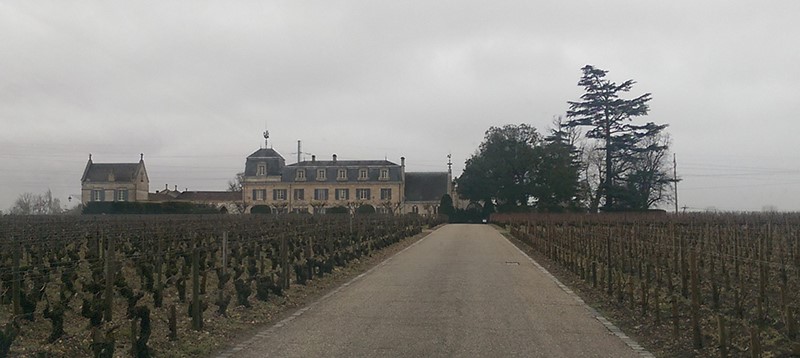
Mission Haut Brion Coincidentally, Bloomberg published this article on Monday: Is Now the Time to Buy a Case of Château Lafite? http://www.bloomberg.com/news/articles/2015-08-10/is-now-the-time-to-buy-a-case-of-chateau-lafite-
Then again today: http://www.bloomberg.com/news/articles/2015-08-12/lafite-2010-falls-to-lowest-this-year-on-liv-ex-market
The “value” in the market is becoming headline news, which in the past has augured very well. Journalists love to be first with the story. They were keen to stress the declines throughout the bear phase, just as there were countless column inches during the bull. After a period of torpor it seems they once again smell a good thing. For those who are keen to add to their portfolios or indeed start one, we would recommend La Mission Haut Brion 2000.
“Mission” is regarded as “the sixth First Growth”. Subsequent to the General Classification of 1855 only one wine has been accorded Premier Cru status: Mouton Rothschild in 1973. By most measures La Mission Haut Brion is the next in line, and indeed many experts regard it as having Premier Cru status. Since 1961 it was been accorded 100 points on 5 occasions, the same as Latour. By contrast, Haut Brion has 4, Lafite has 3, and Margaux and Mouton 2 each. In short, it is right up there with the First Growths in all bar name.
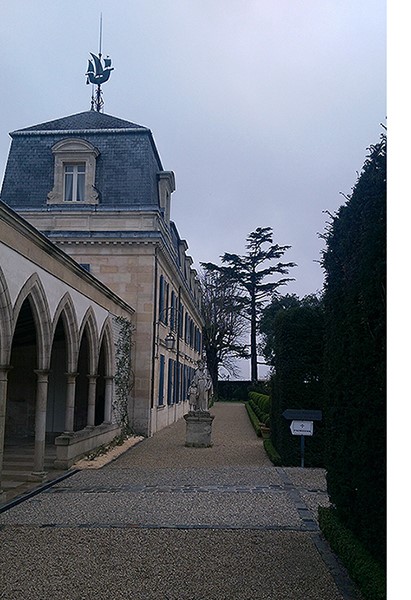 Most wines from Bordeaux enjoy a “Millennium premium”, Mouton and Lafite being the most obvious examples. Mouton 2000 scores 96 points and costs over £12,000, whilst the 99 point 2009 costs under £5,000. The 98 point Lafite costs around £11,000, whilst the 99 point 2010 costs under £6,000.
It is the same story on the Right Bank, and amongst the Super-Seconds. From Beychevelle to Pichon Baron, Lynch Bages to Leoville Las Cases, there is a sizeable premium of up to 40%.
What is so interesting about La Mission Haut Brion 2000 is that it trades at parity with its 100 point sisters from 2005 and 2009, enjoying no Millennium premium at all. Furthermore, it is now very close to its drinking window, and as an example of what happens to the price once supply starts to evaporate, see the 1989 and 1982 vintages, both scoring 100 points and now trading at over £10,000.
To sum up, La Mission Haut Brion 2000 is a perfect 100 point scoring wine from the exquisite Millennium vintage.
It trades at zero premium to its peers unlike most other Bordeaux wines.
It trades at a significant discount to the First Growths despite being of similar pedigree and achieving, bar Margaux, a superior score.
It trades at a 50% discount to its 100 point scoring back vintages from 1989 and 1982.
Buy La Mission Haut Brion 2000.