
Keep calm and carry on Latour
18.03.22 – Fine Wine Investment –
It always seems odd to be writing about investment issues when such events as are unfolding in Ukraine hold centre stage, but life doesn’t press the pause button and although markets are emotionally linked to such matters on a short term basis, beyond that they are ethically agnostic. People still need to get paid out on their pensions.
The Fine Wine market was reminded of this earlier in the week when Chateau Latour released a tranche of its 2014 vintage. More casual observers of this space may just need reminding that 10 years ago Latour decided to withdraw from the annual Bordeaux En Primeur extravaganza whereat everyone else releases their most recent harvest onto the market.
It is still a subject of considerable debate as to why the Chateau chose to do this, but a commonly held view is that by restricting availability onto the open market it would engineer more elevated price levels for each vintage. It is quite hard to believe that any experienced market operative would do this because the benefit of the restricted supply side of the equation is completely undermined by the future availability still sitting in the Chateau’s cellars pending ultimate release.
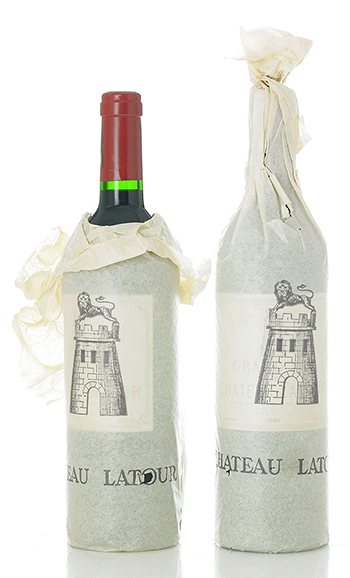
In mainstream equity markets this is known as a “tap” on the stock. If investors know that a shareholder is releasing only part of their shareholding onto the market, they will obviously be wary of buying it because they’ll never know when more is going to be released. Additional supply tends to result in downward price pressure.
Latour will usually compound this mistake by releasing further tranches of the existing free float of a back vintage at a premium to the currently available market price, in the misguided belief that ex Chateau stock somehow merits a premium. This is, of course, complete nonsense, because bonded warehouses go to considerable lengths to ensure that they match cellar conditions, and even insure against the possibility of something going wrong. Collectors may for their own reasons prefer ex chateau stock, but collectors are a fraction of the number of investors who in turn are a fraction of the number of consumers, and they couldn’t give two hoots about where it came from so long as it has been stored properly.
Coming back to the current issue of 2014 Latour, ahead of release Liv-ex evidently suggested that a price of £4,200, in line with 2012 and 2013, “would look compelling”. This wasn’t particularly helpful because not only was the 2013 vintage extremely indifferent, but the price of both has risen since issue (the 2013 only modestly, because the vintage is relatively poor). If Latour had offered the 2014 at that level it would have been a gift, and these regal producers aren’t exactly known for their generosity. As it happened, the price was £4,950.
Another eminent player in the market place opined that at this price it was a significant discount to the top vintages. That’s like saying a 3 Series is at a significant discount to a 7 Series. The 2009 and 2010 are 100 pointers from two of the best vintages of all time, so yes, the 2014 deserves to come at a significant discount. The only way to know if a cost is good value or not is to be able to compare through the prism of an algorithm, which is how we at Amphora judge relative value. Even then, as mentioned above, if a particular Latour appears to be good relative value, is there further ex chateau supply coming out further down the line?
The 2004 and 2008 Latours are comparable in price to the 2014, and both are inferior in terms of overall vintage score and critical appraisal. The difficulty is we all know there will be additional issues of 2014 at some future date. It is already hard to assess the amount of older vintages still in circulation, and we believe Latour make it nigh on impossible to gauge good investor value in respect of more recent vintages through this stance on releasing wines to the market.
Clearly the invasion of Ukraine has exposed the inherent volatility in world equity markets. There was already concern over the post pandemic inflation picture, so we can hardly be surprised that these markets have corrected. The timing of their recovery is out of investors’ hands. We have once again seen the resilience of Fine Wine prices in the face of this volatility. Volatility and its opposite, stability, are neither inherently good nor bad, they just are, and investors need to take account of them as they construct portfolios.
At the end of his March 2022 monthly newsletter Yves Bonzon, Chief Investment Officer of the Julius Baer Group, talks about scarce commodities as being amongst the few assets that are conflict-resistant. Not only are fine wines scarce, but notwithstanding the unusual strategic approach taken by Chateau Latour, they are getting more scarce all the time, as they are consumed. In addition Amphora argues that they are rare even in the world of commodities, improving all the time as they age in the bottle. Not many commodities improve with age. And what happens to the price of something which improves as its availability to market diminishes?