
En primeur 2021. To buy or not to buy.
24.05.22 – Fine Wine Investment –
There is a great spectator sport that takes place this time every year, as Fine Wine producers and commentators tie themselves in knots trying to justify what is more often than not going to be an absurdly priced en primeur campaign. Screeds are written about the climatic conditions of the prior growing and harvesting season examining in minute detail levels of temperature and rainfall and prevalence of frost and mildew, all of which would be of considerable value if the pricing of the wines resulting therefrom were to bear any relation to the established facts.
Sadly that is seldom the case. It is perfectly clear that 2021 has given rise to an indifferent Fine Wine vintage, one in which it is possible that a producer might have created an excellent wine. Whoever has managed to do so given the adverse conditions deserves a considerable accolade, but the key question for an investor, colloquially speaking, might be: “a quoi ca sert?” “Of what use is it?”
We are neither being rude nor dismissive here, but an investor’s principal considerations are to cut the c**p and look for what is hidden under the bonnet. Wine producers exist to make and sell wine, and their shareholders insist, quite rightly, that they do so as advantageously to those shareholders as possible. This will mean that we can expect a great deal in terms of marketing spiel, but as in any other walk of life you can’t always take what you are told at face value.
To our mind, at Amphora, if a producer makes a really good wine in a very difficult year it is proof that they have attained a level of skill that we should take note of, clearly, but not necessarily that we should charge out and fill our boots with that particular wine. Not only does it have to be priced attractively, taking into account all the conditions relevant to every other producer in the market place, but we have to make a judgement call on how the overall vintage will stand the test of time.
If the wine is not priced attractively, and there are questions over how the vintage will stand the test of time, then why would anyone buy it? Why indeed, yet year after year this appears to be the expectation imposed on the market place by the producers. This year, however, there are additional issues afoot. If the wines don’t find a home they will have to be stored, which reduces immediate revenues and incurs charges, all at a time of significantly rising costs. Then there are those unusual geo-political activities which may compromise demand.
Before we get too carried away with all this though we should remember, as investors, that none of this is our problem. All we care about is whether any of the new releases are good value or not, and if not, we move on. It might have been of more investment significance 20 years ago when Bordeaux represented almost the entirety of the Fine Wine investment space, but as we are constantly reminded such is not now the case.
Collectively we might hope that Bordeaux producers would recognise this and become more realistic in terms of their pricing expectations, because they are certainly becoming more approachable as the vintages pass. Time was when their hauteur made you wonder if they actually knew they were in a competitive environment, but now we are seeing much more focus on marketing, and indeed, brand enhancement.
For many this has taken on an ESG hue, with a redevelopment of whole processes along environmentally friendly lines. To Amphora’s way of thinking, admirable though this may be, we should not confuse sustainability of production with investment allure. Chateaux should become more bio-diverse out of self-interest, but we very much doubt whether it will affect the decision as to which wine is selected from any restaurant wine list. It is possible that it might help inform a decision at en primeur time, but there is no evidence of this as yet.
So let’s have a quick look at a couple of the early releases. Cheval Blanc, described as “cerebral” by Neal Martin, a description which will drive many readers’ eyes into their own cerebellum, has emerged Ex-London open at £4,740. It scores 95-97, and compares for quality with the 97 point 2006, also an indifferent vintage in St Emilion. The latter is priced at £4,900 with any decent merchant, has 16 years aging and thus is additionally much more scarce than the new release. For inclusion in an investment portfolio the 2021 would have had to come at a considerable discount to the 2006.
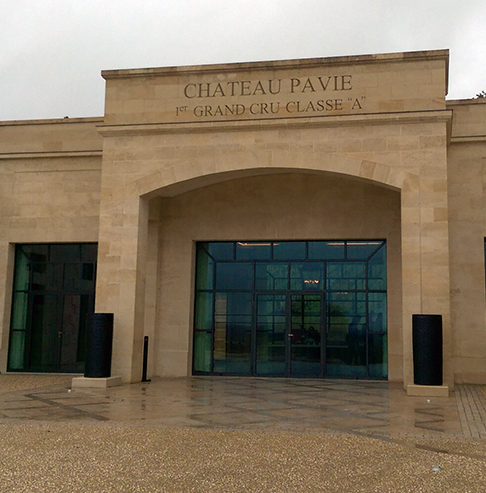
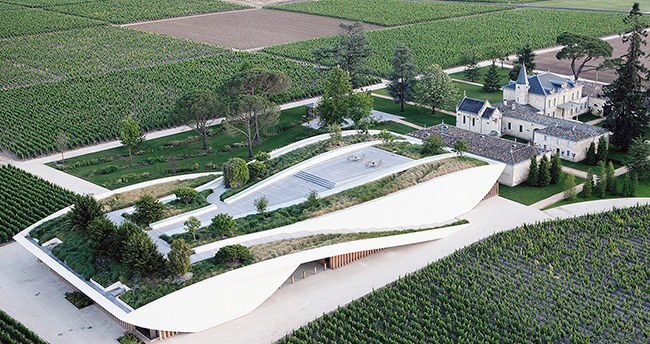
For Pavie the same applies. It has emerged at £2,784 and Neal Martin rates it at 93-95. As a point of comparison the 2006 which is also rated at 95 is available for £2,600. Antonio Galloni who is a less influential critic rates it higher at 95-97 and believes it has “tremendous potential”. If you share his view then feel free to pick up a few, but as with the Cheval Blanc for the moment we will pass.
At times it seems that Bordeaux is swimming against the tide in terms of increasing competition from elsewhere in the world. That was irrelevant when Asia became such a big player about 15 years ago, because for those consumers the brand name meant everything. The market has developed a lot since then, and the market share of Bordeaux wines has dropped accordingly. This is evolutionary rather than cyclical and to our mind there will be no bounce back to the heady days of a 70% market share.
Bordeaux will rise or fall in the fight against an increasing number of competitors, and from an investment perspective we should all be aware of this. We argue that it deserves a significant place in most portfolios, because of the depth and breadth of the offering, and the extent to which this confers liquidity and relative value comparisons. En primeur campaigns, though, are a good time to be reminded that other regions are knocking loudly at the door.
If you are interested in finding out which Bordeaux 2021 wines we select for wine investment portfolios then please click here to register your interest.