
Regrades and Classifications
02.09.22 – Fine Wine Investment –
The Fine Wine market has paused for breath over the last month or so which is not too surprising given its outstanding performance over the year to date, flying ahead despite the combined headwinds of global economic and geo-political outlook which have dented the returns of more mainstream markets. We aren’t about to rehearse the reasons for this but would simply offer the reminder that an asset class which is both resilient in adversity and yet also positively reactive to economic prosperity merits serious consideration in any diversified asset portfolio.
Over the next few weeks we are likely to learn the results of the 2022 St Emilion reclassification, which may offer price enhancement benefits to promoted estates. It surprises many people that the famous 1855 classification covers only Left Bank producers. Over on the Right Bank Pomerol has never seen fit to soil its hands with such trivialities, despite or perhaps because it is home to the world-renowned Petrus and Le Pin, whist St Emilion was quite late to the party, producing its first classification effort in 1955 and a second in 2012.
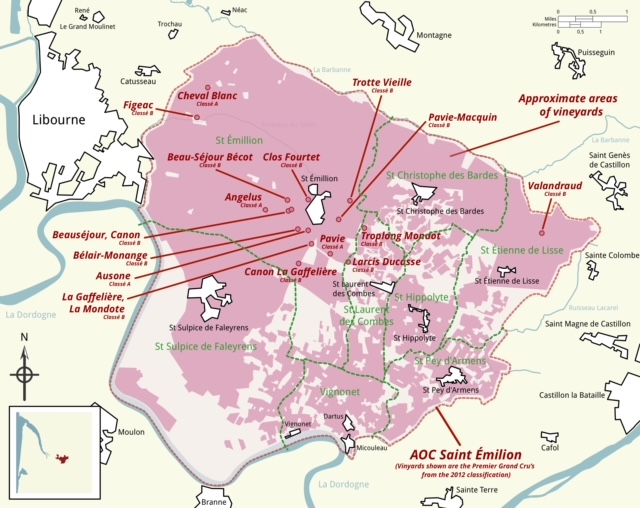
To front and centre of the stage a decade ago leapt Angelus and Pavie, the price of whose wines enjoyed a significant immediate uplift on the news of their elevation to Premiers Grands Crus Classes A, a privilege shared only with Ausone and Cheval Blanc. We await with bated breath the result of the current deliberations, in case the same benefit may befall a Figeac, say, or a Canon.
To say that the background to all of this has been fraught would be something of an understatement. The criteria against which the wines were judged in the 2012 classification were many and varied, of which the quality of the wines themselves represented only a 30% weighting (at the Classes A level). Reputation in the market place, terroir, the estate itself “and its practices” were all taken into consideration.
It should come as little surprise, therefore, that one or two disappointed parties registered their displeasure by taking the judging authority to court, and writ followed counter writ as people like Hubert de Brouard of Chateau Angelus were accused of abusing their position. He in turn would file a suit for libel and defamation, without success, and by way of bringing the whole picture up to date Angelus, Ausone and Cheval Blanc have all expressed what they think of the whole melange by withdrawing from the classification altogether. Oh to be an avocat en la belle France!
Meanwhile back in the real world Lisa Perrotti Brown has been reviewing the highly-rated 2005 vintage. When it came to bottle in 2008 Robert Parker somewhat under-scored the vintage in what was viewed as a crusade against the pricing of the top producers. (He should have kept his powder dry for 2009 and 2010.) Most other critics eulogised about it at the time though, and at virtually every opportunity since, LPB being the most recent.
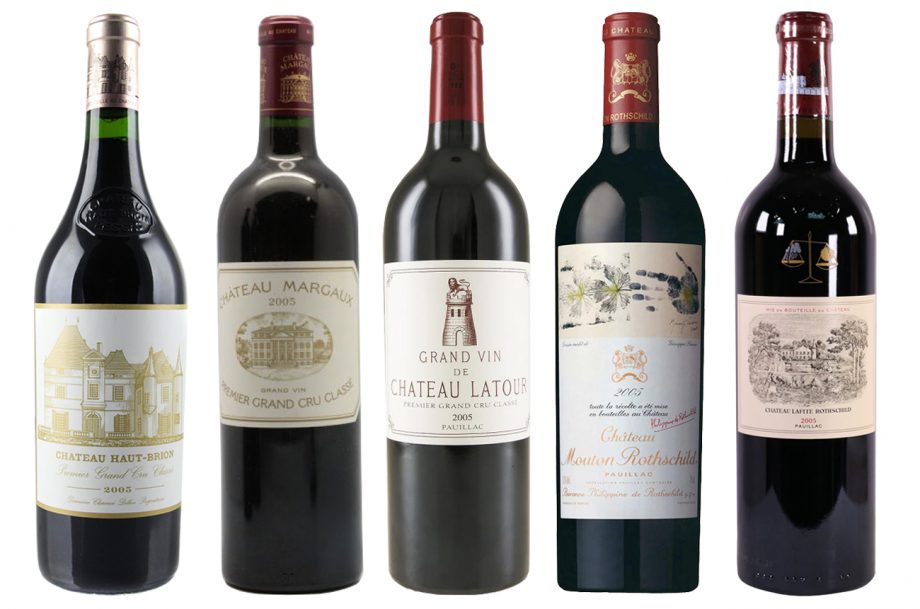
Exceedingly tannic at the outset the wines of 2005 were always destined to take some years to show their colours in all their resplendent hue. If you ever have the chance to visit Bordeaux at en primeur tasting time do avail yourself of it, because to do so is to understand the difference between a Master of Wine and the rest of us normal mortals. In short, fine wines either as they go into barrel to begin the two year maturation process, usually in the early summer after harvest, or indeed two years later as they are bottled, are unrecognisable as consumables.
Wine critics will observe as much as their lips redden and their palates become dull at the repetitive astringency of the young wines they have the privilege to taste. It’s not a job for the faint-hearted, however the core skill of the top critic is to determine at this very early stage which wines are going to turn out as winners. Imagine finding a 6 year-old Ben Stokes or Virat Kohli playing cricket with their mates on the beach. Maybe they would indeed stand out like tall poppies, but now imagine 30 future international cricketers from a cast of 150, all looking pretty much the same.
This was what shot Robert Parker to stardom in 1982, identifying a cracking vintage when most of the other critics missed it. Anyway LPB has ladled out 7 updated 100 point scores to Ausone, Cheval Blanc, Haut Brion, La Mission Haut Brion, Latour, Lafleur, and Pavie. Before we cry: “Stop the clocks” we should just check where she sits against her opposition, as it were, and with regret we have to advise that the cavalry has arrived before her, in no form other than Robert Parker himself, in his 2015 retrospective.
With Parker Chateau Ausone enjoyed 100 points from the outset, whilst the rest of this magnificent seven ranged from 95+ (Lafleur) to 98 (Haut Brion and Pavie). In 2015 he upgraded them all, bar Latour, to the full 100 point monty. Latour languishes on 98.Thus we are gifted the chance to see the impact Lisa Perrotti-Brown now has in the Fine Wine market place. On a 5 year view Latour 2005 is in lockstep with the Liv-ex 50; on a 2 year view it is up 29% against the index’s 19%; it has slightly underperformed year to date. We watch with interest.